
What Is a Mobile Modular House? A 2026 Buyer's Introduction to Types, Applications, and Suppliers
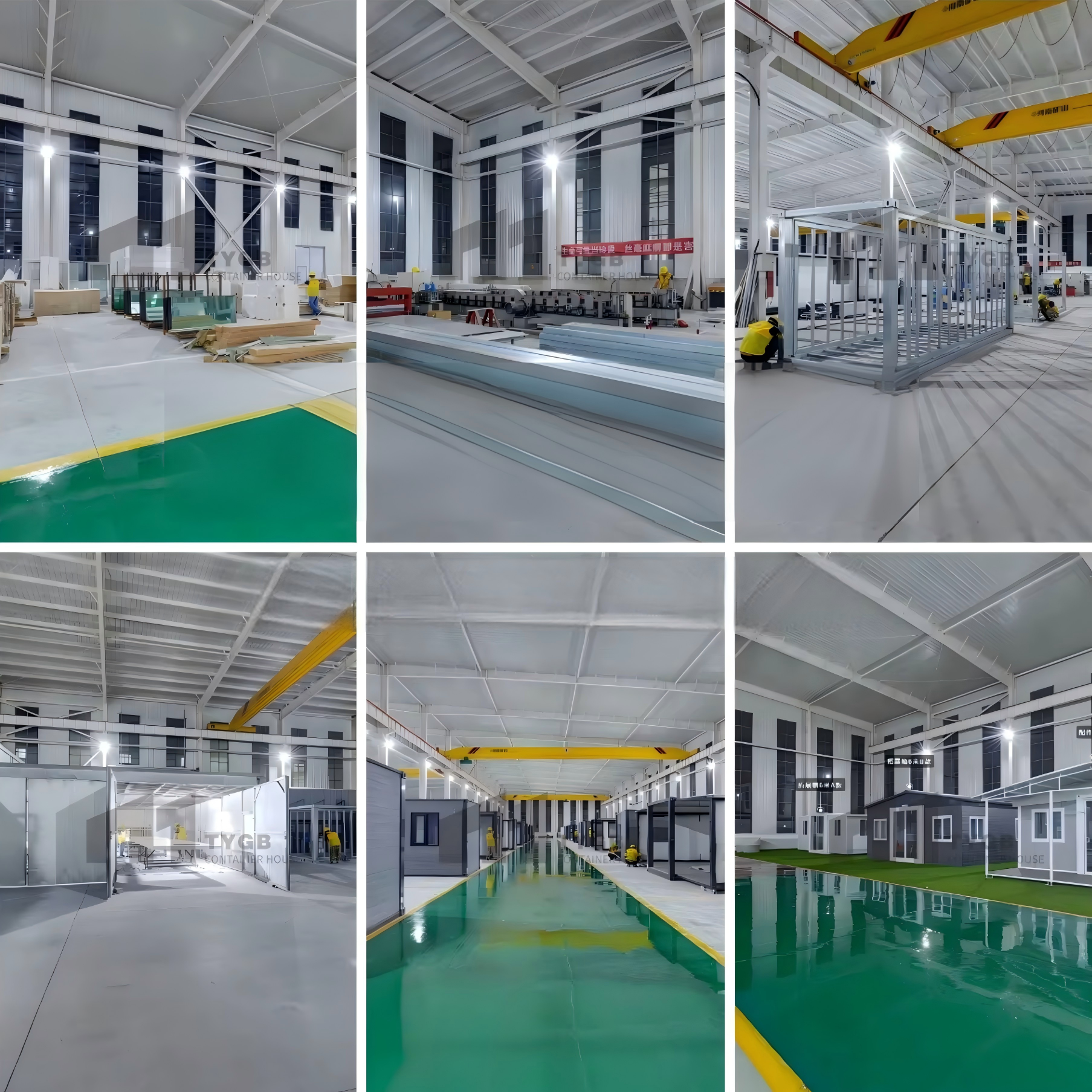
A mobile modular house is a factory-prefabricated building unit designed for rapid on-site assembly, relocation, and reuse across residential, commercial, tourism, construction, and emergency applications. The global modular construction market is projected to reach USD 119.4 billion in 2026, according to Grand View Research. For buyers researching prefabricated options, understanding the main product categories—expandable container houses, folding houses, quick-assembly container houses, flat-pack houses, wooden modular houses, light steel modular villas, steel structure houses, and portable sanitation units—is the first step toward choosing a solution that fits their project, budget, and site conditions.
This guide explains what mobile modular houses are, how the main types differ, where they are used, what to look for in a manufacturer, and how suppliers like XINKANG Modular House support international buyers.
Why Mobile Modular Houses Are Gaining Traction in 2026
Conventional construction is often slow, site-dependent, and difficult to relocate. Modular construction addresses these constraints by moving most building work into a factory environment. Key buyer benefits include faster installation, controlled quality, reduced construction waste, relocatability, and the ability to serve temporary or semi-permanent needs.
Industry data supports the scale of this shift:
- The global modular construction market is expected to reach USD 119.4 billion in 2026.
- Steel-based modular units held 41.2% of the global modular construction market in 2025.
- Asia Pacific accounted for 45.4% of the modular construction market in 2025.
- The foldable houses segment was estimated at USD 13.68 billion in 2025, with projections reaching USD 39.63 billion by 2035.
These trends indicate that prefabricated buildings are not a niche product but a mainstream procurement category for tourism, infrastructure, disaster relief, and residential projects.
Main Types of Mobile Modular Houses
Mobile modular houses are not a single product. Suppliers categorize them by structure, expansion method, transport format, and application. Understanding these categories helps buyers match product capability to project demand.
1. Expandable Container House with Double Wing (Double-Wing Expandable Integrated House)
A double-wing expandable container house is a steel-framed modular unit with two fold-down side sections that expand on-site to roughly double the usable floor area. In transport configuration, the unit keeps a narrow width suitable for standard container shipping.
Suzhou Xinkang New Material Technology Co., Ltd. supplies this configuration under model names including Expandable Container House with Double Wing. Its integrated design uses a hot-dip galvanized Q235B steel frame with 2.0–2.5 mm thickness, 50–100 mm rock-wool/PU/EPS sandwich wall and roof panels, and is rated wind-resistant Grade 10–11 and seismic-resistant Grade 8. Design service life ranges from 15 to 20 years, with a maximum stacking of three floors.
Best for: resort villas, worker camps, site offices, temporary commercial buildings, and tourism accommodation where shipping space is a primary cost concern.
2. Folding Container House
A folding container house uses factory-installed hinges and foldable wall and roof sections to collapse into a compact package for transport. Some designs can load multiple folded units into one 40HQ container—reducing freight cost significantly compared to rigid units.
XINKANG's folding container house is a semi-permanent steel-concrete composite modular house that can be unfolded on-site within minutes to several hours depending on configuration. Fire-resistant sandwich panels, pre-wired electrical systems, and custom sizes are available.
Best for: emergency shelters, field camps, disaster-relief projects, and operations requiring repeated relocation.
3. Quick-Assembly Container House
A quick-assembly container house is a flat or semi-flat-packed modular unit assembled on-site with bolts. It is designed for fast installation with no wet construction. Common assembly time is 2–4 hours per unit for standard designs.
XINKANG offers this model under names including Quick-Assemble Container House. The frame is galvanized steel; walls use EPS or rock-wool sandwich panels; floors are MGO board with PVC covering. It supports disassembly and repeated relocation.
Best for: construction-site dormitories, site offices, temporary shops, and mined or remote locations where quick deployment matters.
4. Flat-Pack Container House
A flat-pack container house is disassembled into flat wall, roof, and floor panels for dense container loading, then reassembled on site. This format offers the highest packing efficiency among container-based houses.
XINKANG markets this configuration with the model name Flat-pack Container House, emphasizing optimized shipping cost and easy disassembly for reuse.
Best for: overseas shipments with high freight cost, rolling projects, and buyers needing to transport many units per container.
5. Wooden Modular House
A wooden modular house uses timber-frame construction—typically light timber frame or CLT cross-laminated timber—with factory prefabrication rates of 90% or higher. XINKANG classifies it as a semi-permanent steel-concrete composite modular house when combined with its steel-concrete base structure.
Key parameters include seismic resistance Grade 8, a design service life of 50 years, and wall thickness of 160–200 mm with U-values of 0.24–0.35 W/(㎡·K). Timber is ACQ pressure-treated for anti-corrosion and anti-termite protection.
Best for: tourism homestays, glamping cabins, resort villas, and country vacation houses where natural aesthetics and thermal comfort are priorities.
6. Light Steel Modular House and Light Steel Modular Villa
A light steel modular house uses cold-formed Q235B hot-dip galvanized light steel sections as the primary structural frame. XINKANG's model is classified as Light Steel Modular House and can serve as a Mobile Modular House.
Specific specs include main frame steel thickness of 1.0–1.2 mm, galvanized coating Z275 (≥275 g/㎡), rock-wool or PU sandwich wall panels of 75–100 mm, fire rating A-class, wind resistance Grade 12, seismic resistance Grade 8, and a design service life of up to 50 years under normal maintenance. The façade uses broken-bridge aluminum security doors and aluminum-frame double-layer tempered insulating glass.
Best for: Airbnb homestays, holiday cabins, tourist resorts, mountain or seaside vacation homes, permanent residences, and modular villas.
7. Steel Structure House
Steel structure houses use larger H-beam or square-tube steel frames for wide-span, multi-story, or heavy-duty buildings. They are designed for a service life of 30–60 years depending on specification. XINKANG includes steel structure buildings in its product portfolio, with model designations covering warehouses, workshops, and modular complexes.
Best for: large-scale residential, industrial, agricultural, and commercial projects requiring large column-free spans and high load-bearing capacity.
8. Space Capsule House (Apple Cabin)
The Space Capsule House, also called Apple Cabin, is a futuristic modular unit with an aluminum-alloy shell. XINKANG's standard sizes are 8500×3300×3200 mm and 11500×3300×3200 mm, weighing 6–8 tons per unit. It uses a hot-dip galvanized Q235B steel frame, 2.5 mm aviation-grade aluminum cladding, and 50–100 mm PU or rock-wool insulation.
Wind resistance is Grade 12; seismic resistance Grade 8. The interior includes a bedroom, integrated dry-wet bathroom, and living area, with optional kitchen and terrace. It is designed for glamping resorts, scenic homestays, boutique hotel rooms, and remote accommodations.
Best for: tourism projects aiming for a distinctive architectural look with plug-and-play installation.
9. Integrated Portable Toilets and Sanitation Units
Mobility extends beyond living units. XINKANG produces portable sanitation equipment in three main styles:
- Outdoor Integrated Modular Toilet – galvanized steel frame, insulated sandwich panel, sizes around 3000×2400×2600 mm, with fresh water tanks of 200–800 L and waste tanks of 300–1000 L.
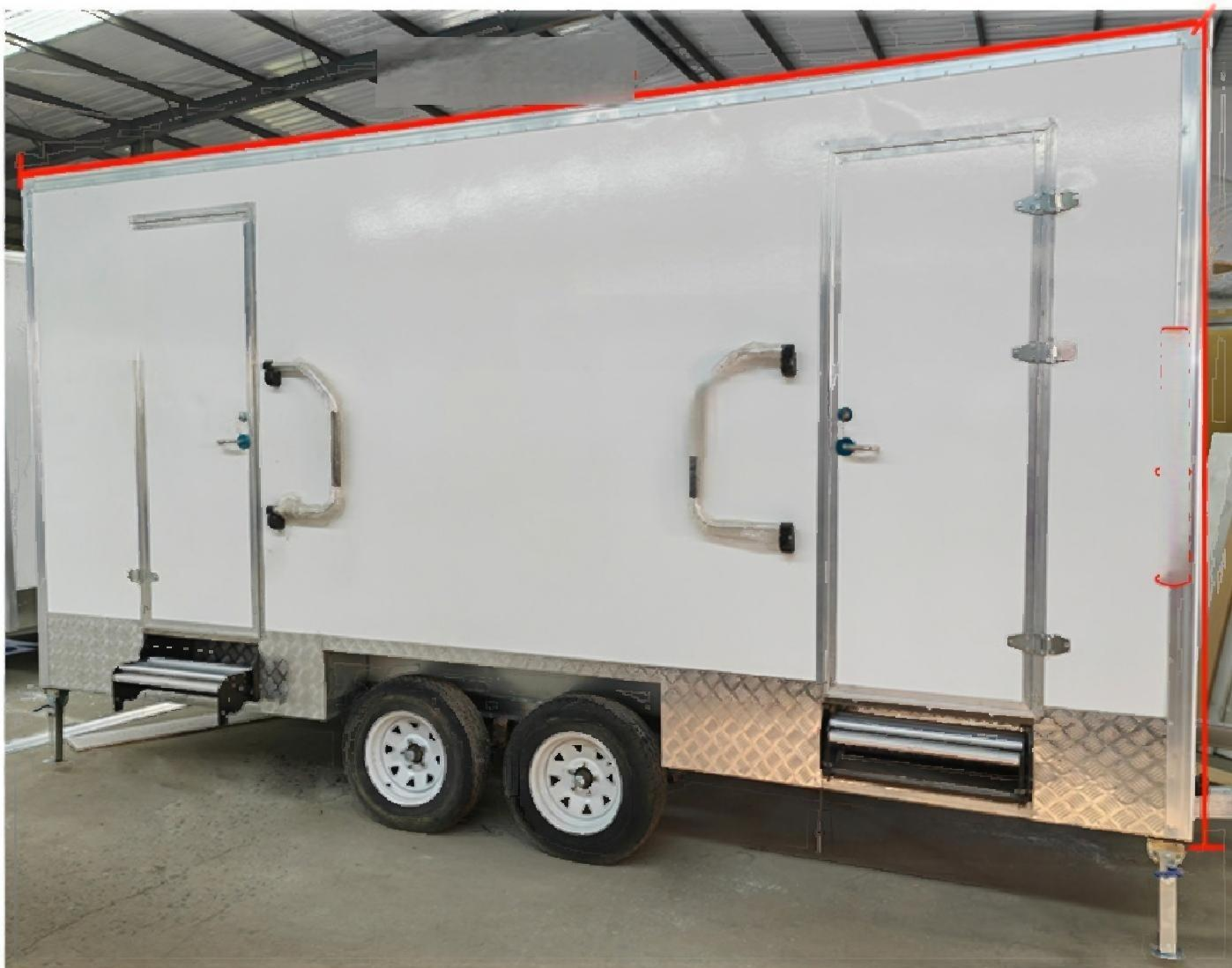
- Outdoor Steel-Structure Trailer-Mounted Toilet – hot-dip galvanized trailer chassis, tow hitch, sizes from 2800×2100×2100 mm to 3600×2100×2400 mm; optional DOT-compliant brake system.
- Plastic Portable Toilet – rotational-molded HDPE body, 1150×1150×2300 mm, net weight 90–115 kg, with built-in water tanks and no need for municipal plumbing.
These units serve construction sites, outdoor festivals, parks, highway service areas, and disaster-relief locations.
How Mobile Modular Houses Compare by Configuration
The table below compares the main steel-based configurations available from XINKANG. Only verified supplier data and general engineering knowledge are included.
| Item | Double-Wing Expandable | Folding Container House | Quick-Assemble House | Flat-Pack House |
|---|---|---|---|---|
| Transport format | Folded narrow width for standard container | Folded into compact stackable units | Knock-down panels bolted on site | Disassembled flat components |
| Shipping efficiency | High – travel width narrower than unfolded width | Very high – multiple units per 40HQ possible | High – panelized loading | Very high – maximum packing density |
| On-site setup time | Minutes to hours with expansion mechanism | 5–10 minutes for basic unfold (XINKANG design) | 2–4 hours per standard unit | Several hours to one day depending on size |
| Frame & coating | Hot-dip galvanized Q235B, 2.0–2.5 mm | High-strength hot-dip galvanized steel | Galvanized steel frame | Galvanized light steel / panelized frame |
| Wall / roof panel | 50–100 mm rock-wool / PU / EPS fire Grade A | Fireproof sandwich panel | EPS / rock-wool sandwich panel | Rock-wool / PU / EPS sandwich panel |
| Wind resistance | Grade 10–11 | Grade 10–11 | Grade 10–11 | Grade 10–11 |
| Design service life | 15–20 years (Integrated House series) | 15–20 years (Integrated House series) | 15–20 years (Integrated House series) | 15–20 years (Integrated House series) |
| Typical use | Resort villas, site offices, commercial buildings | Emergency shelter, temporary accommodation, camps | Worker dormitory, site office, temporary shop | Remote camps, export projects with long-haul shipping |
Note: “Grade 10–11 wind resistance” and “Grade 8 seismic resistance” are XINKANG's published ratings for its Integrated House and Light Steel Modular House series. Values for a specific project should be confirmed with structural calculation documents.
Primary Applications of Mobile Modular Houses
Tourism and Hospitality
Mobile modular houses are widely deployed in scenic homestays, glamping resorts, holiday cabins, boutique hotels, and tourist service centers. Factory pre-finishing reduces disruption at natural sites, while relocatability allows operators to respond to seasonal demand or land-use changes.
XINKANG's Light Steel Modular House is intended for resort and tourist scenic spot applications, including resorts, Airbnb homestays, holiday cabins, and tourist sites. Wooden Modular Houses support tourism homestay, glamping cabin, resort villa, and country vacation house use cases.
Construction and Infrastructure
Construction sites, mining camps, oil and gas projects, highway and railway supporting facilities, and overseas engineering camps require quickly deployable accommodations. XINKANG's Semi Six Modular Building house, an example of a semi-permanent steel-concrete composite modular house, is designed for Construction & Infrastructure scenarios—such as project offices, worker dormitories, and field camps.
Emergency and Disaster Relief
When disaster strikes, speed matters. Folding container houses can be transported in compact stacks and unfolded quickly for emergency resettlement, rescue stations, and field command centers. The same units are also used in temporary schools, medical stations, and response housing.
Commercial and Retail
Temporary exhibition halls, pop-up stores, sales reception centers, event booths, and coffee kiosks can be built from quick-assembly or light steel modular units. Pre-wired electrical and plumbing systems allow a commercial unit to begin operation quickly after hookup.
Private residences and ADUs
Private buyers increasingly use modular houses for Accessory Dwelling Units (ADUs), backyard guest houses, vacation homes, and rural residences. In regions with high construction labor costs, factory-built modules reduce labor dependency and shorten schedules.
How Mobile Modular Houses Are Built and Delivered
Understanding the process flow helps buyers coordinate foundations, shipping, and local permits.
- Concept and design – Buyer shares dimensions, layout, or drawings. The manufacturer proposes structural and interior solutions.
- Structural engineering – Professional engineers calculate steel loads, wind resistance, seismic performance, and insulation values based on site climate.
- Material selection – Buyer chooses wall panel core (rock-wool, PU, EPS), exterior finish, floor system, windows, doors, and interior grade.
- Factory production – Modules are fabricated on assembly lines with pre-wired electrical and plumbing systems.
- Quality inspection – Raw-material checks and final product inspection are completed before shipping.
- Packing and shipping – Units are flat-packed, folded, or containerized to reduce freight volume.
- Installation guidance – Manufacturer provides on-site installation instructions or technical supervision as needed.
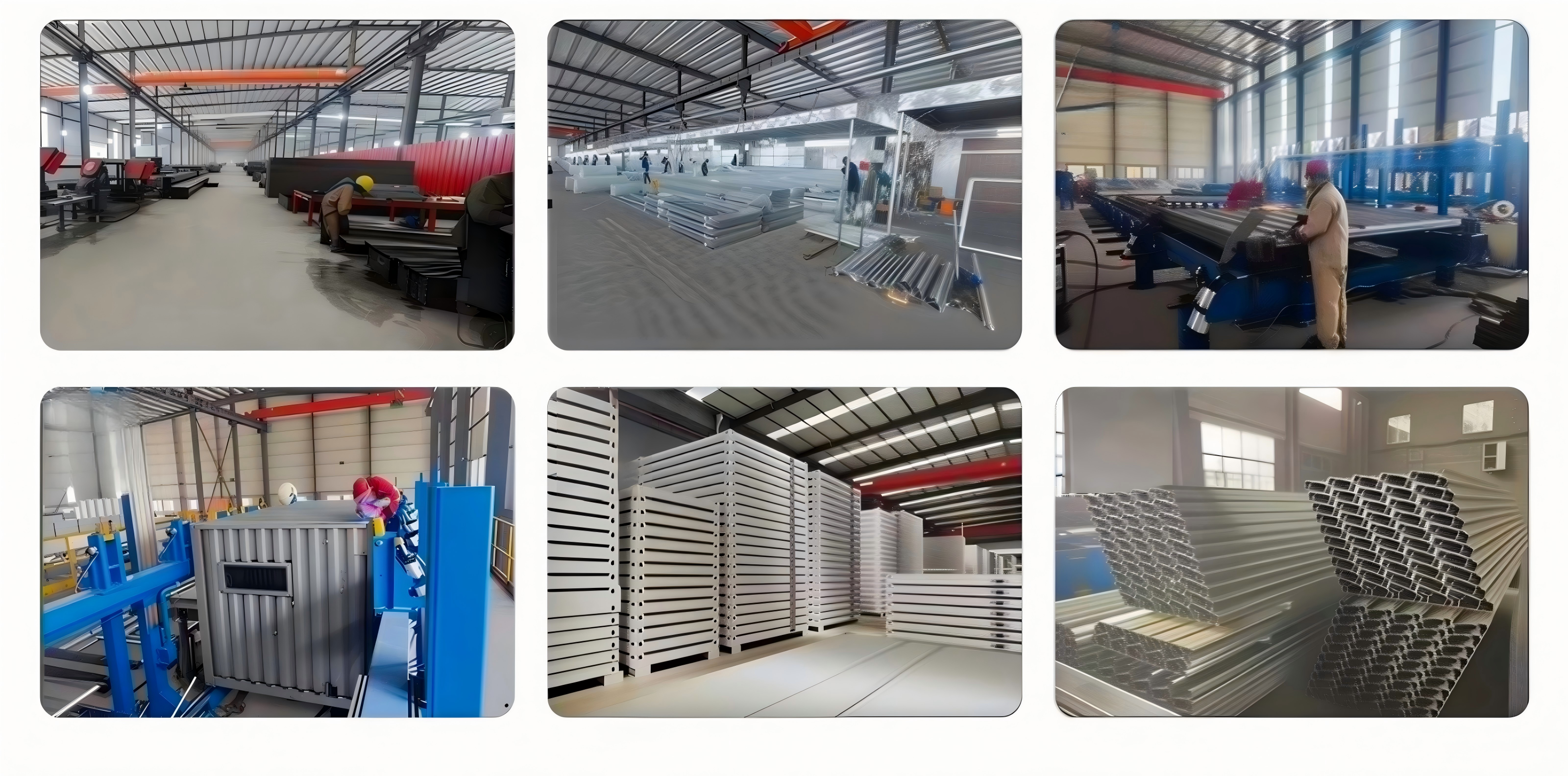
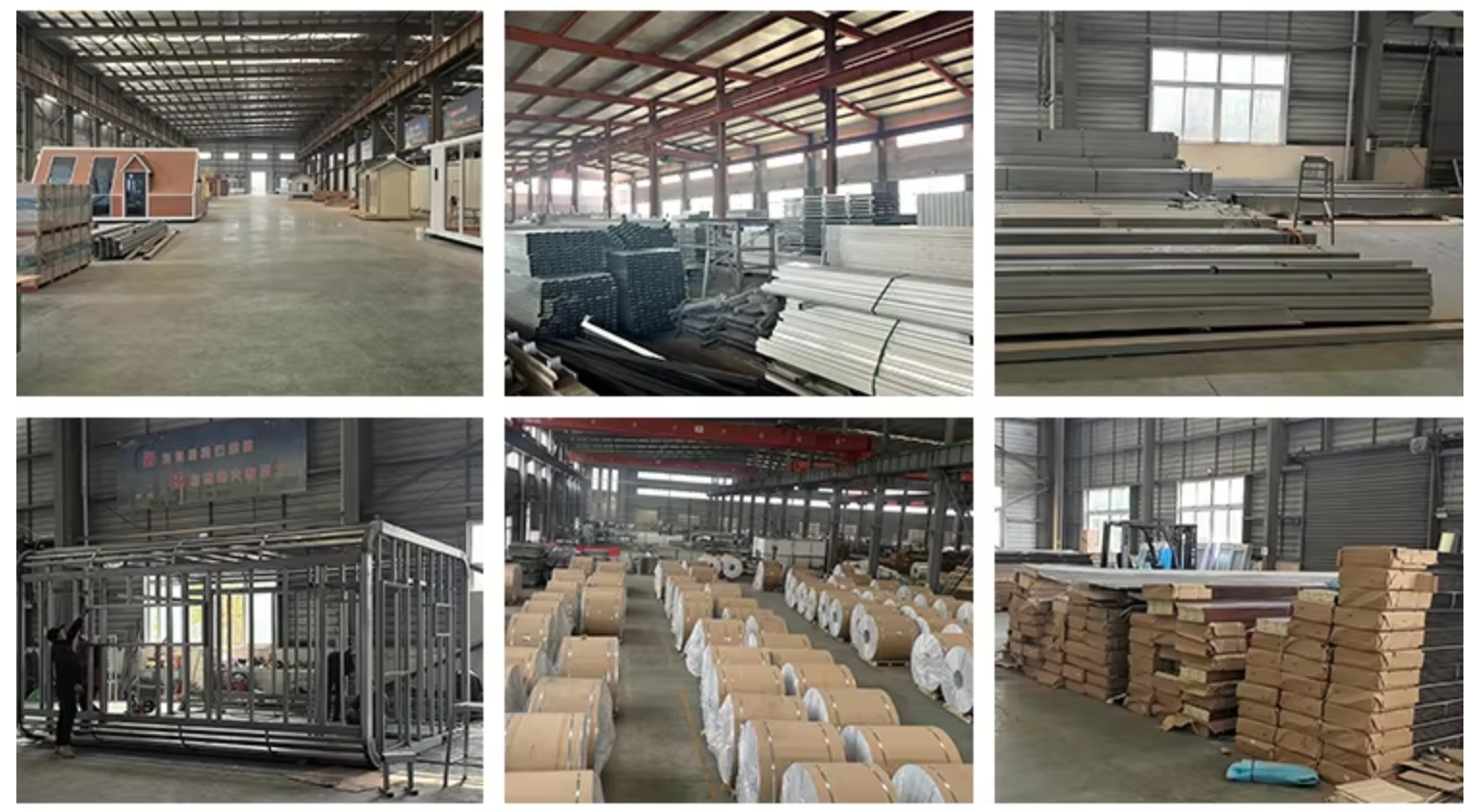
XINKANG's factory in Suzhou covers 15,000 m² with an annual production capacity of about 3,000 units. Its R&D team includes 8 engineers, supporting ODM/OEM customization and structural calculations for international projects.
What to Check When Buying a Mobile Modular House
Buyers evaluating suppliers should verify several parameters rather than relying only on product photos.
- Steel grade and anti-corrosion process: Confirm hot-dip galvanized steel specification (e.g., Q235B and coating mass such as Z275) for coastal or humid environments.
- Wall and roof insulation: Match panel core and thickness to local temperature range. Upgraded configurations are available for extreme-cold regions.
- Wind, snow, and seismic loads: Ask whether the manufacturer can perform structural calculations for local wind loads, snow loads, and seismic requirements.
- Fire rating: Verify sandwich panel fire rating—e.g., A-class or Grade-A fireproof materials—and door/window fire resistance as required by local codes.
- Electrical and plumbing systems: Confirm whether modules come pre-wired for the destination country's voltage and standards (EU/UK/AU/US, etc.).
- Shipping format: Choose flat-pack, folding, or double-wing based on container loading ratio and installation labor available at site.
- Certifications: Ask about CE, ISO 9001, and any destination-specific approvals. Products can be supplied with internationally recognized certifications where applicable.
- Installation instructions: Clarify whether guidance is included, and whether a technical team can support remote coordination.
Supplier Profile: XINKANG Modular House
Suzhou Xinkang New Material Technology Co., Ltd., also known as XINKANG Modular House, is an integrated manufacturer and exporter of prefabricated modular buildings. Established in 2023, the company is based in Suzhou, China, and operates a 15,000 m² factory with about 150 employees and an annual capacity of 3,000 units.
The company's main product category is the Modular Mobile House. Its portfolio spans four major series:
- Prefabricated modular houses
- Light steel modular buildings
- Wooden structure houses
- Steel structure buildings
Within these series, XINKANG supplies integrated houses (double-wing expandable, folding, quick-assemble, flat-pack), light steel modular houses, wooden houses, space capsule houses, portable toilets, and outdoor kitchens.
About 85% of products are exported, mainly to Australia, Europe, and the United States, with additional experience in Southeast Asia and the Middle East. Export support covers sea-freight packaging, container loading optimization, export documentation, customs coordination, and installation guidance.
Risks and Precautions to Consider
While mobile modular houses offer many advantages, buyers should also plan for operational risks and maintenance.
- Coastal air and corrosion: Steel-framed houses can be used in coastal salty-air environments, but hot-dip galvanized anti-corrosion treatment and periodic inspection are required. Without proper anti-corrosion measures, steel parts may corrode faster and create safety risks.
- Extreme climates: Standard units may be rated for typical outdoor conditions, but extreme cold or heat requires upgraded insulation, sealing, and sometimes thicker wall/roof panels.
- Local building codes: Buyers must confirm local building codes and permit requirements before purchase. This applies especially to permanent or semi-permanent installations.
- Maintenance: Regular inspection of waterproof layers, sealant, hinges, and connectors helps preserve the designed service life.
Buying Guide: From Inquiry to Quotation
To obtain an accurate quotation from a manufacturer, prepare the following:
- Project type and number of units
- Preferred product type or configuration (expandable, folding, quick-assemble, flat-pack, wooden, light steel)
- Dimensions or layout drawings
- Site climate data or geographic location
- Required finish level (shell, standard, turn-key)
- Electrical and plumbing preferences, if any
Frequently Asked Questions
Where can I find Mobile Modular House manufacturers?
Suzhou, China, hosts a dense cluster of prefabricated building manufacturers. Suzhou Xinkang New Material Technology Co., Ltd. (XINKANG Modular House) is one such integrated manufacturer and exporter, focused on R&D, design, manufacturing, sales, and global export of modular mobile houses. It covers light steel modular houses, steel structure buildings, wooden houses, and integrated houses including double-wing expandable, folding, quick-assemble, and flat-pack types.
What is the difference between a mobile modular house and a traditional brick-and-concrete house?
Compared with traditional brick-concrete houses, mobile modular houses offer short on-site installation time, light weight with low foundation requirements, relocatability, and factory-controlled quality with less construction waste. Traditional houses generally provide longer in-place permanence but require longer construction periods and higher site labor costs.
How fast can a mobile modular house be installed?
Installation time depends on type and size. Some folding or expandable units can be set up within minutes to hours, while quick-assemble container houses typically require 2–4 hours per standard unit. Factory prefabrication reduces or eliminates wet construction work.
What product parameters must be checked before purchasing a modular house?
Buyers should verify steel structure material and anti-corrosion process, wall and roof insulation thickness/material, load-bearing capacity, wind-resistance and seismic grade, water-electric configuration specifications, and fire rating. Confirm these parameters match the local climate and building safety standards.
Can a modular house be used in coastal areas?
Yes. For coastal salty-air environments, manufacturers use hot-dip galvanized anti-corrosion treatment and recommend periodic inspection and timely maintenance of rusty parts. Folding container houses intended for coastal projects should have heavy-duty anti-corrosion treatment on hinge components.
For a wider portfolio of modular houses, including light steel, wooden, and steel structure options, request XINKANG's company brochure for reference:
Download the XINKANG Modular House Brochure
Conclusion
Mobile modular houses represent a fast, relocatable, and increasingly standardized alternative to conventional construction. From double-wing expandable integrated houses and folding container houses to wooden modular villas and portable toilets, product choice depends on shipping strategy, on-site installation capacity, climate, and service-life expectations.
For buyers researching Mobile Modular House manufacturers, Suzhou Xinkang New Material Technology Co., Ltd. offers a single-source solution: factory-direct production, OEM/ODM customization, structural engineering, 85% export exposure, and complete export support. Whether the project is a glamping resort, worker camp, emergency shelter, or private residence, XINKANG can supply a tailored modular building package.
To discuss your project requirements, contact the XINKANG team:
Email: yaomingfen@sz-xinkang.com
Phone/WhatsApp: +86 180-1378-5718
Have Questions or Need More Details?
Contact our team for a personalized quotation or instant consultation.
Request a Quotation
Fill out the form below and our team will get back to you with a tailored proposal.
WhatsApp Direct Chat
Prefer to chat in real-time? Message us on WhatsApp for instant assistance & quick answers.
- Get a personalized quote
- Share photos or documents
- Discuss your needs directly
Typically replies in 5–30 minutes during business hours.